Gluti
Cross-contamination: where gluten gets transferred in the kitchen
A dish can be made entirely from gluten-free ingredients and still contain gluten. The reason is almost always the same: cross-contamination. Here’s where it happens and how to tell that a kitchen is careful.
Gluti offers guidance and is not a medical device. Its information does not replace medical advice.
What is cross-contamination?
Cross-contamination means gluten gets from a food containing gluten into a gluten-free one, via oil, water, equipment, hands or flour dust. The dish is then no longer gluten-free, even though every single ingredient is.
How much gluten is too much?
Less than most people assume. In the EU, a food may only be called “gluten-free” if it contains no more than 20 milligrams of gluten per kilogram. Eat a whole 200 gram plate of it and you take in at most four milligrams. That is the order of magnitude we are talking about.
That this is not an exaggerated limit is shown by a controlled trial: adults with coeliac disease took a daily capsule containing 10 or 50 milligrams of gluten, or a dummy, for 90 days. At 50 milligrams the lining of the small intestine deteriorated measurably. At 10 milligrams the difference from the dummy group was not meaningful on average, but individual participants still developed symptoms. The authors concluded that unintended intake should stay below 50 milligrams a day. They did not name an amount that is harmless.
For comparison: a slice of wheat bread contains several grams of gluten, many times that daily amount. A few crumbs are therefore quickly too much, and that is exactly why “I’ll just take the bread off” is not a solution.
Why is the fryer so often the problem?
Because breaded and battered food sheds into the oil. Schnitzel, nuggets, battered fish or onion rings leave breading and flour in the fat, and the oil is often used for days. Chips from the same fryer are therefore not gluten-free, even if the potatoes are.
The only safe option is a dedicated fryer used exclusively for gluten-free food. A separate basket in the same oil isn’t enough, and fresh oil only helps until the first schnitzel goes in.
What matters with a pizza oven?
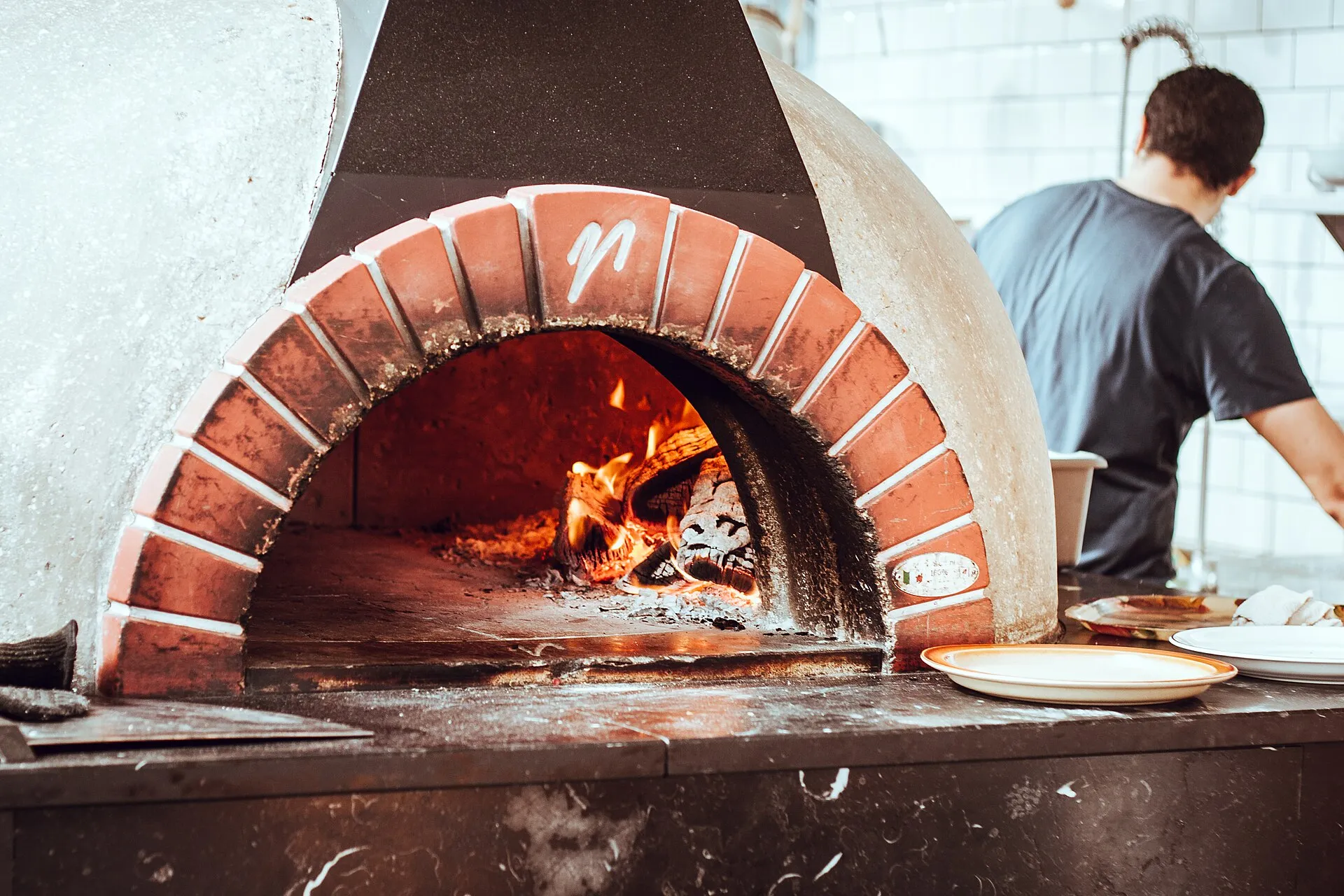
There is almost always flour or durum wheat semolina in a pizza oven: on the oven floor, on the peel and on the work surface. Both contain gluten. A gluten-free base placed straight onto the stone picks it up.
Done well, gluten-free pizza is baked on its own tray or in its own tin, with its own peel and on a surface without flour. A separate oven is even better. Ask about the toppings too: ingredients from the open containers at the pizza station have often been touched by floury hands.
Why is a shared toaster risky?
Crumbs collect in every toaster and end up on the next slice of bread. The same goes for contact grills, sandwich makers and waffle irons. In a hotel or café, a toaster bag or a separate toaster just for gluten-free bread helps. If neither is available, untoasted gluten-free bread is the safer choice.
Why is flour dust underestimated?
Because you can’t see it once it has settled. Kneading, rolling and dusting send flour into the air, and it comes down on surfaces, handles, equipment and open ingredients. From there it travels on via hands and tools, and a quick wipe spreads it rather than removing it.
For you that means: a kitchen where flour is being worked alongside is not a good place for your dish, even if every ingredient in it is gluten-free. Kitchens that handle this well solve it through sequence and prepare gluten-free food before the first bag of flour is opened.
Where else does cross-contamination happen?
| Spot | What happens | What helps |
|---|---|---|
| Pasta water | Gluten-free pasta cooked in water used for regular pasta | Fresh water, its own sieve |
| Pan and griddle | Leftovers from breaded food, bread or marinade | Clean thoroughly or use a separate pan |
| Wok | Soy sauce and noodles from the previous dish | Clean pan, gluten-free soy sauce |
| Board and knife | Breadcrumbs from slicing | Separate or thoroughly cleaned board |
| Butter and spreads | Knives with crumbs in the shared tub | Own portion |
| Buffet | Spoons and tongs move between dishes | Serve yourself early or ask for food from the kitchen |
| Flour dust | Flour spreads through the air during baking and dusting | Prepare gluten-free food in a separate area |
| Hands and gloves | Bread first, then salad | Wash hands, change gloves |
| Slicing machine | Cold cuts and cheese run through the same machine as bread | Ask for an uncut piece |
| Taps and glasses | Beer residue on the glass and at the tap | Your own glass, no swapped glasses at the table |
What does not help?
A few common solutions look like care and still are not:
- Wiping instead of washing. A damp cloth spreads crumbs and flour rather than removing them, and carries them to the next work station.
- Taking the bread off. Whatever was on the plate has left crumbs. The plate needs replacing, not the topping.
- Pulling off the breading. The meat underneath has been in the same fat and was turned in flour first.
- A separate basket in the same fryer. The oil is the problem, not the basket.
- Skimming the top layer. Whether in a sauce, in pasta water or in ice cream: gluten spreads, it does not float.
- Enzyme supplements from the pharmacy. With coeliac disease they do not replace a gluten-free meal and do not make a contaminated dish edible.
How can I tell that a kitchen is careful?
Good signs are:
- Staff check with the kitchen instead of saying “that’s fine” straight away.
- You get specific answers: dedicated fryer, own tray, fresh pasta water.
- Gluten-free dishes are marked on the menu, and allergen information is available.
- Your plate arrives marked or is brought separately.
- You are told what won’t work. Anyone who says openly “I can’t give you the chips” has understood the point.
The questions you can ask are in the guide What to ask in a restaurant.
What should I do if it happens anyway?
Nothing dramatic, first of all. A single contamination is unpleasant, but it doesn’t make the diagnosis worse or undo the effort so far. Depending on the person, symptoms start after hours or only the next day and can last several days. Some people with coeliac disease notice nothing at all although the lining reacts, and that is one reason you can’t go by how your stomach feels.
It helps to note down briefly where you ate and what. Do that a few times and patterns emerge, for example a chain where it regularly goes wrong. And tell the place, calmly and factually: many kitchens simply don’t know that the shared fryer is a problem, and will change it if someone says so.
What do the levels on Gluti say about cross-contamination?
The three levels describe exactly this risk:
- 100% gluten-free: there is no gluten in the kitchen. Cross-contamination can’t happen there.
- Separate preparation: food containing gluten is cooked too, but kept apart, for example with a dedicated fryer or a separate work area.
- Gluten-free options: there are gluten-free dishes, but everything is made in the same kitchen. Traces are possible.