Gluti
Gluten-free travel in Germany, Austria and Switzerland
The three German-speaking countries have similar allergen rules, and “glutenfrei” is a word everyone knows. A little preparation still helps, especially with hotel breakfasts and regional food.
Gluti offers guidance and is not a medical device. Its information does not replace medical advice.
Is it hard to eat gluten-free in Germany, Austria and Switzerland?
No, with some preparation it works well. In all three countries “glutenfrei” (gluten-free) is a familiar term, supermarkets have dedicated shelves, and restaurants must be able to tell you about allergens. The tricky parts are cross-contamination and regional dishes where flour or breadcrumbs are not obvious.
What does “glutenfrei” mean on packaging?
In the EU and in Switzerland, food may be labelled “glutenfrei” if it contains no more than 20 milligrams of gluten per kilogram. So the label means the same in all three countries. It often comes with the crossed grain symbol as well, which the coeliac societies license to businesses they have audited.
Next to it you sometimes see “sehr geringer Glutengehalt” (very low gluten). That is something else: the upper limit there is 100 milligrams per kilogram, and for people with coeliac disease the claim is not equivalent.
How do I spot gluten on the menu?
Restaurants must be able to provide information on the 14 major allergens, and cereals containing gluten are one of them. How they do it differs:
- Germany: The information may be given verbally but has to be documented in writing. Menus often say something like “Fragen Sie unser Personal nach Allergenen” (ask our staff about allergens).
- Austria: Many menus mark allergens with letters. A stands for cereals containing gluten. A dish without an A is a good first sign, but it does not replace asking how it is prepared.
- Switzerland: Staff must be able to give you the information here too, often verbally.
Allergen labels only tell you whether gluten is an ingredient. Whether a dish goes into the same fryer or onto the same board as breaded food is not written anywhere. For that, see What to ask in a restaurant, and the card to show in a restaurant is available in German, English and Spanish.
Which typical dishes often contain gluten?
Many regional classics contain flour, breadcrumbs or bread:
- Breaded dishes such as Wiener Schnitzel, Backhendl (fried chicken) or cordon bleu.
- Dumplings (Knödel, Klöße), Spätzle, Nockerl and Maultaschen.
- Sauces and soups thickened with flour, for example with roasts or goulash. Also soup garnishes such as Frittaten (pancake strips), semolina dumplings or liver dumplings.
- Cheese fondue, which is often thickened with a little flour, and the bread that comes with it. Thickened with cornflour it is gluten-free, so ask.
- Beer, brewed from barley or wheat. Gluten-free beer is available in many supermarkets.
Dishes based on potatoes, meat, fish and vegetables without sauce or breading are a good bet, for example raclette with potatoes, grilled fish or rösti. Still ask: sometimes a little flour goes in, or it is fried in the same pan.
Which regional dish contains what is set out one by one in the index Is it gluten-free?.
What should I watch out for at hotel breakfast?
The breakfast buffet is the hardest meal of the trip for many people:
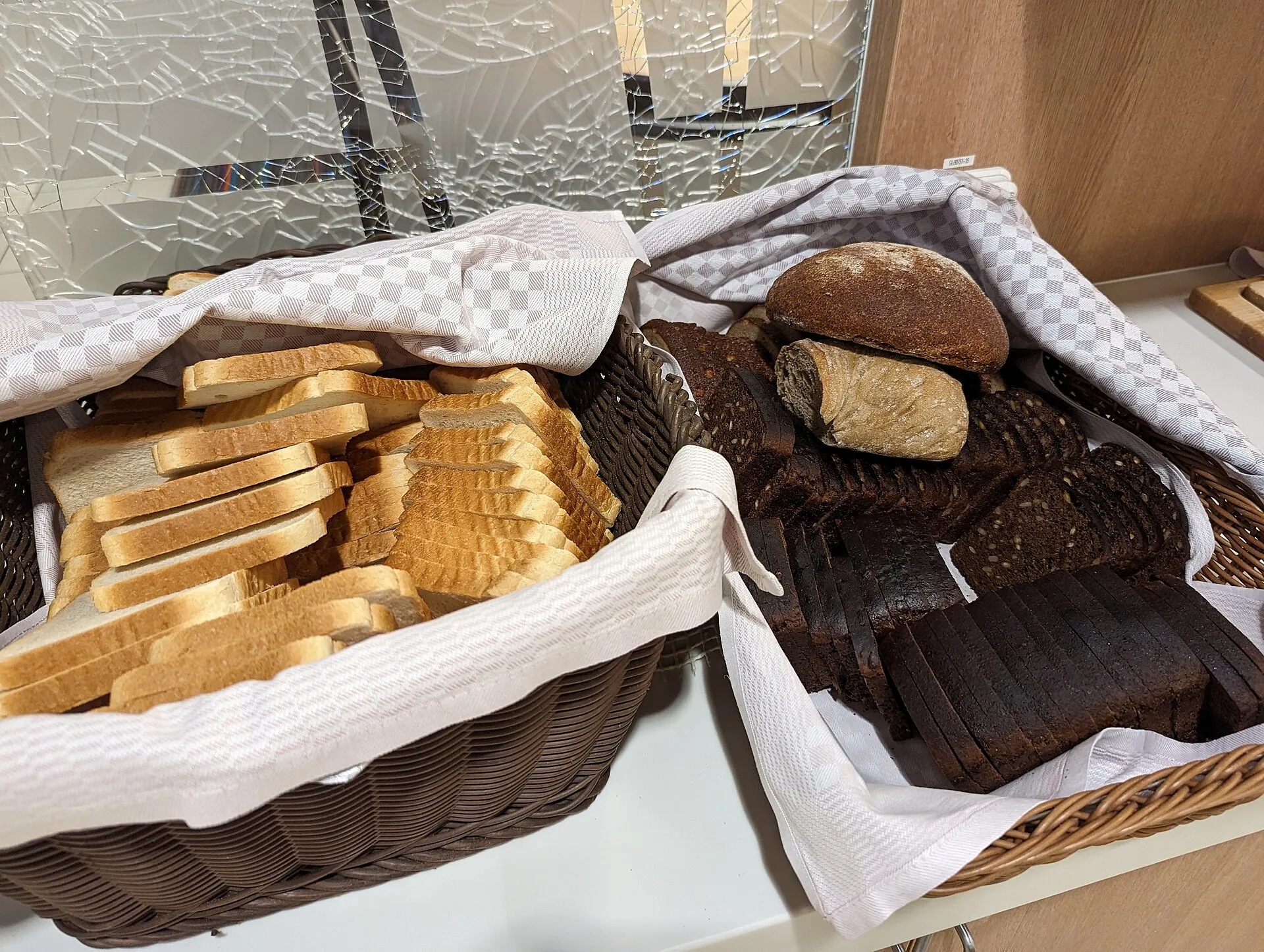
- The bread basket and bread slicer spread crumbs across the whole buffet.
- Toasters are shared by everyone. A reusable toaster bag lets you toast gluten-free bread separately.
- Butter, jam and spreads in open bowls pick up crumbs. Individual portions are safer.
- Muesli and cornflakes often contain barley malt or regular oats.
It is best to tell the hotel when you book: many will get packaged gluten-free bread or set aside a portion for you if they know in advance. Ask not only about the bread, but whether your breakfast can come from the kitchen instead of the buffet. That is the easier route for both sides, and most places do it without any fuss.
How do I get through the day on the move?
Between two places is where it gets thinnest. Plan for it in advance:
- Train: what the onboard bistro has changes and is rarely set up for coeliac disease. Don’t count on it, buy before you board. Stations in larger cities usually have a supermarket with long opening hours, Sundays included.
- Airport: past security, packaged products are the safe choice. You may take solid food in your hand luggage; spreads and drinks fall under the liquids rule.
- Motorway: service stations are the hardest place of all, almost everything there is pastry or fried. Plan an exit with a supermarket instead.
What belongs in the stash?
A small bag that always travels with you prevents most emergencies:
- Packaged gluten-free bread or crispbread, long-lasting and flat.
- Nuts, dried fruit and a few bars labelled “gluten-free”.
- A toaster bag, in case you want to toast at the hotel.
- Small portions of spread, so you don’t have to go into the shared tub.
Where can I buy gluten-free food on the road?
Larger supermarkets in all three countries have a gluten-free shelf. In Germany, drugstores such as dm and Rossmann also carry a wide range. In Switzerland, look for the “Free From” range at Coop and the “aha!” allergy label at Migros. Supermarkets are usually closed on Sundays and public holidays; railway stations and petrol stations are then often the only option. A small stash of snacks saves you stress.
What do I say in French-speaking and Italian-speaking Switzerland?
West and south of the language border, German stops helping. These sentences are enough:
- French: “Je suis cœliaque, je ne peux pas manger de gluten, même pas des traces.” On the menu it says “sans gluten”. Flour is “farine”, breaded is “pané”, sauce is “sauce”.
- Italian: “Sono celiaco”, or “sono celiaca” for a woman, “non posso mangiare glutine, nemmeno tracce.” On the menu it says “senza glutine”. Flour is “farina”, breaded is “impanato”.
In Italy and in Italian-speaking Switzerland, coeliac disease is well known. Many places recognise the word “celiachia” and handle it as a matter of routine.
How do I prepare for the trip?
Look up places before you leave. In Gluti the map shows the restaurants and cafés listed at your destination, and the level tells you how they work. Save them as favourites so you have them at hand on the road. Let your accommodation know when you book, ideally in writing.
Many airlines let you pre-order a gluten-free meal (often coded “GFML”). Bring something of your own anyway.
The coeliac societies in each country offer information for travellers and in some cases lists of checked venues: the Deutsche Zöliakie Gesellschaft (DZG) in Germany, the Österreichische Arbeitsgemeinschaft Zöliakie in Austria and the IG Zöliakie der Deutschen Schweiz in Switzerland.
Know a good place that is missing from Gluti? You can suggest it in the app so others find it on their next trip.