Gluti
Gluten-free in cafés and bakeries: what to look out for
Cake, bread rolls, breakfast: gluten-free is especially tricky wherever baking happens. A few questions help you find out what still works.
Gluti offers guidance and is not a medical device. Its information does not replace medical advice.
Why are bakeries difficult with coeliac disease?
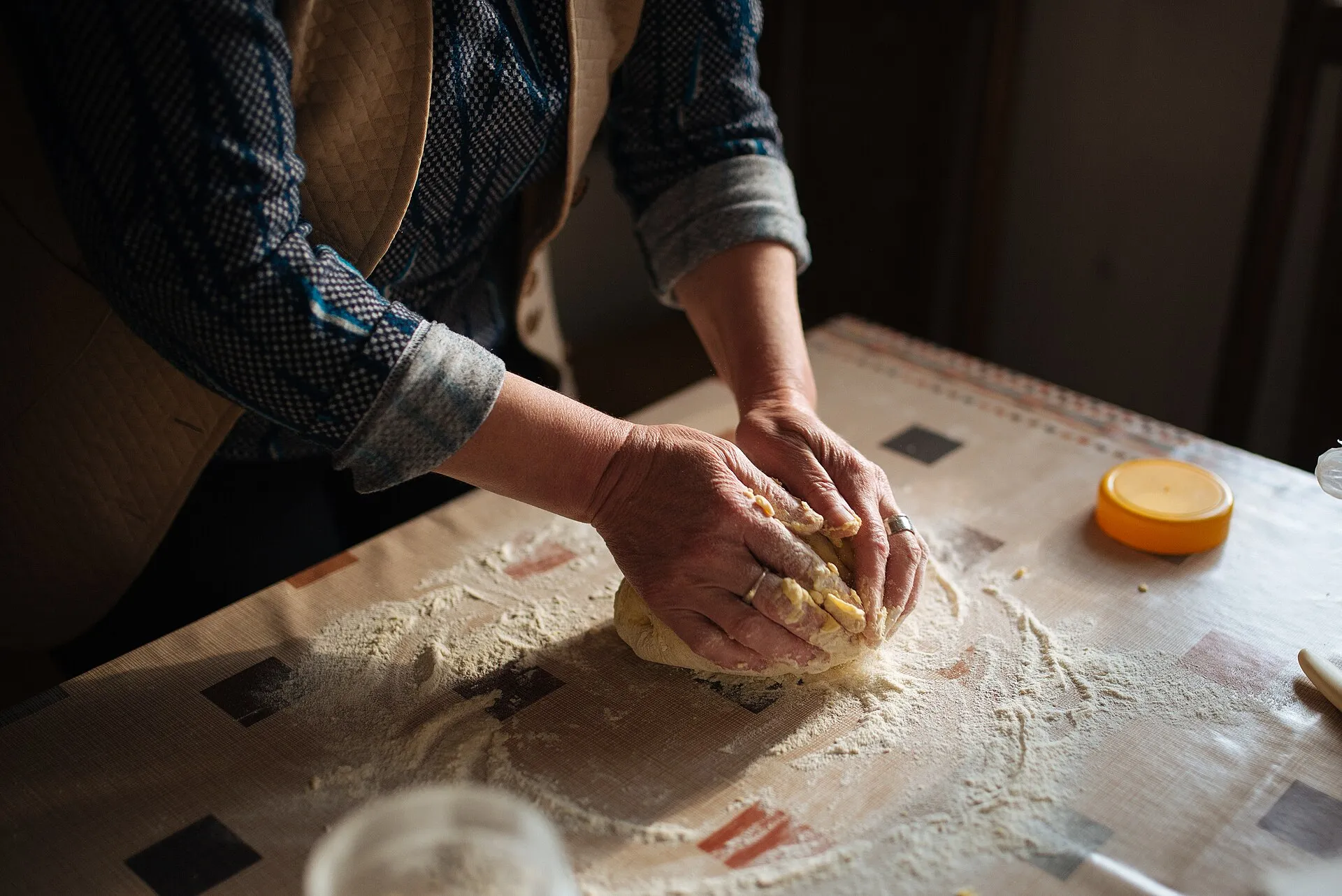
Because there is flour in the air. Kneading, rolling and dusting spread flour dust through the bakery, and it settles on surfaces, trays and finished products. On top of that come shared ovens, trays, machines and tools.
How long the dust stays airborne depends on particle size, draughts and ventilation, and there are no reliable figures for it. What matters is something else anyway: it settles, and from the work surface it travels on via hands, tongs and knives. That is why the question about the bakery matters more than the question about the recipe.
A gluten-free recipe alone is therefore not enough. If it’s baked in a regular bakery, the result can contain gluten.
What is behind the words “gluten-free”?
A limit. In the EU, a food may only be called “gluten-free” if, as sold, it contains no more than 20 milligrams of gluten per kilogram. There is also the statement “very low gluten”, with an upper limit of 100 milligrams per kilogram. For people with coeliac disease the second one is not equivalent; it appears on specially treated cereal products.
Oats have a rule of their own: oats in a food sold as gluten-free must have been grown and processed in a way that avoids contamination with wheat, rye or barley, and they too must stay below 20 milligrams per kilogram. Ordinary oats off the shelf do not meet that.
The limit applies to unpackaged goods as well. A roll sold as gluten-free from the counter has to meet the same limit as a packaged one. Allergen information is a different thing: it only tells you whether a cereal containing gluten is an ingredient, not what happened in the bakery.
The crossed grain symbol is not an official mark but a licence. Businesses obtain it through the national coeliac societies and are audited for it. Where it appears, that is a good sign, but its absence is not a bad one.
How do I recognise safe gluten-free baked goods?
The safest are:
- Dedicated gluten-free bakeries and cafés where no wheat flour is used at all.
- Packaged baked goods labelled “gluten-free” that are made in a facility set up for this and delivered sealed.
With unpackaged goods in a regular bakery, it depends on the answers:
- Where is the gluten-free pastry made: in your own bakery or brought in?
- Is it baked in the same oven and on the same trays?
- Is it kept separately in the counter, covered or in its own compartment?
- Is it handled with its own tongs and its own knife?
If the gluten-free bread lies uncovered next to the rolls and is picked up with the same tongs, it’s no longer safe, however it was baked. Ask for your loaf unsliced: the slicer is the same one that wheat bread runs through all day, and there is no sensible way to clean it in between.
Baked on site or finished off in a branch?
Many branches do not bake from scratch but heat up pre-made dough pieces. That can work in your favour, because no flour is moved and no dough is kneaded there. It can also mean the opposite, if the gluten-free item is finished off in the same oven as everything else.
So don’t ask “do you bake gluten-free?” but: does the gluten-free product arrive packaged, and is it sold packaged? A branch that hands you a sealed loaf unopened across the counter is safer for you than a craft bakery that proudly bakes its own, in the same room.
Is “flourless” the same as gluten-free?
No. A “flourless” chocolate or nut cake can still contain gluten: as sponge crumbs, a biscuit base, crumble or a wafer, for example under German Lebkuchen and macaroons. And even without an ingredient containing gluten, the risk from the bakery remains.
In a patisserie it is often the parts that don’t look like dough. Under a mousse sits a sponge base, the cream is set with custard powder containing wheat starch, the decoration is a biscuit, and between two layers lies praline with wafer pieces. With a cake, ask about the base, the thickening and the decoration separately.
Watch out for spelt too: spelt is a type of wheat and contains gluten. Spelt rolls are not gluten-free. The same goes for emmer, einkorn, kamut and Grünkern, which is nothing other than spelt harvested while still green.
What do I look out for with coffee and drinks?
Coffee, espresso and tea are naturally gluten-free. It gets tricky with what goes with them:
- Malt coffee and grain coffee are usually made from barley and contain gluten.
- Oat milk is often made from regular oats, which can be contaminated with wheat. Ask whether they have a brand labelled “gluten-free”.
- Toppings such as biscuit sprinkles, cookie crumble or speculoos contain gluten.
- Syrups and cocoa powder are usually gluten-free, but a look at the ingredients doesn’t hurt.
The biscuit on the saucer is a matter of its own. It sits right next to the cup, and whoever removes it has touched it first. Say no to it when you order, rather than lifting it off later.
What do I look out for at breakfast and brunch?
Many risks come together at breakfast:
- Toasters and waffle irons that regular bread and batter go into too. More in the guide to cross-contamination.
- Butter, jam and spreads that knives with crumbs are dipped into. Ask for your own portion.
- Muesli, granola and cornflakes, which often contain wheat, barley malt or regular oats.
- Porridge and overnight oats, which are only an option with oats labelled gluten-free. Many people with coeliac disease tolerate pure oats, but not all. Whether they suit you is best clarified with your doctor.
- Pancakes, often made with the same pan and ladle as regular batter.
Is it worth ordering ahead?
Yes, more than anywhere else. In small businesses, gluten-free baking is a matter of planning: it is baked in a shift of its own, often in the morning before the wheat flour comes out, or it is bought in and has to be ordered. A call the day before costs you two minutes and decides whether there will be anything at all.
Ask at the same time when you should come. Arriving early gets you the goods before they have spent the whole morning in the counter next to the rolls.
On Gluti you’ll find cafés and bakeries with gluten-free options, each with a level that shows how they work.