Gluti
Eating gluten-free in Marburg
Marburg is small, steep and shaped by its university. The choice is limited, and moving from one place to another costs you height. With a little preparation you will still find something good.
Gluti offers guidance and is not a medical device. Its information does not replace medical advice.
Which places in Marburg have been checked?
6 places in and around Marburg have been checked by the Gluti team, within roughly 15 kilometres.
By kind
- 2 Asian restaurants
- 2 Italian restaurants and pizzerias
- 1 café
- 1 restaurant
Which places these are, with a map and the month they were checked, is in the app. The numbers here change as soon as new places are checked.
Can you eat out gluten-free in Marburg?
Yes, with preparation. The choice is limited, and a completely gluten-free place is rare here; whether there is one at the moment is shown on the map in Gluti. What you do get is plenty of simple, quick food, cafés and Asian restaurants. Rice instead of wheat only helps you with the base there, though: most soy sauces contain wheat, and the same often goes for oyster, hoisin and teriyaki sauce, for dumplings, spring rolls and tempura. So ask about the sauce rather than the rice, and about the wok and the fryer.
Allergen information only gets you half of the way: it names what belongs in a dish as an ingredient or processing aid, not which board it was cut on or which already-used fat it was fried in. In a restaurant the information may be given verbally, but then a written or electronic record of the allergenic ingredients has to exist and be made available to you on request. A notice that the information is given verbally has to be displayed or shown on the dish, and that notice is your way into the question.
What should I know about Marburg?
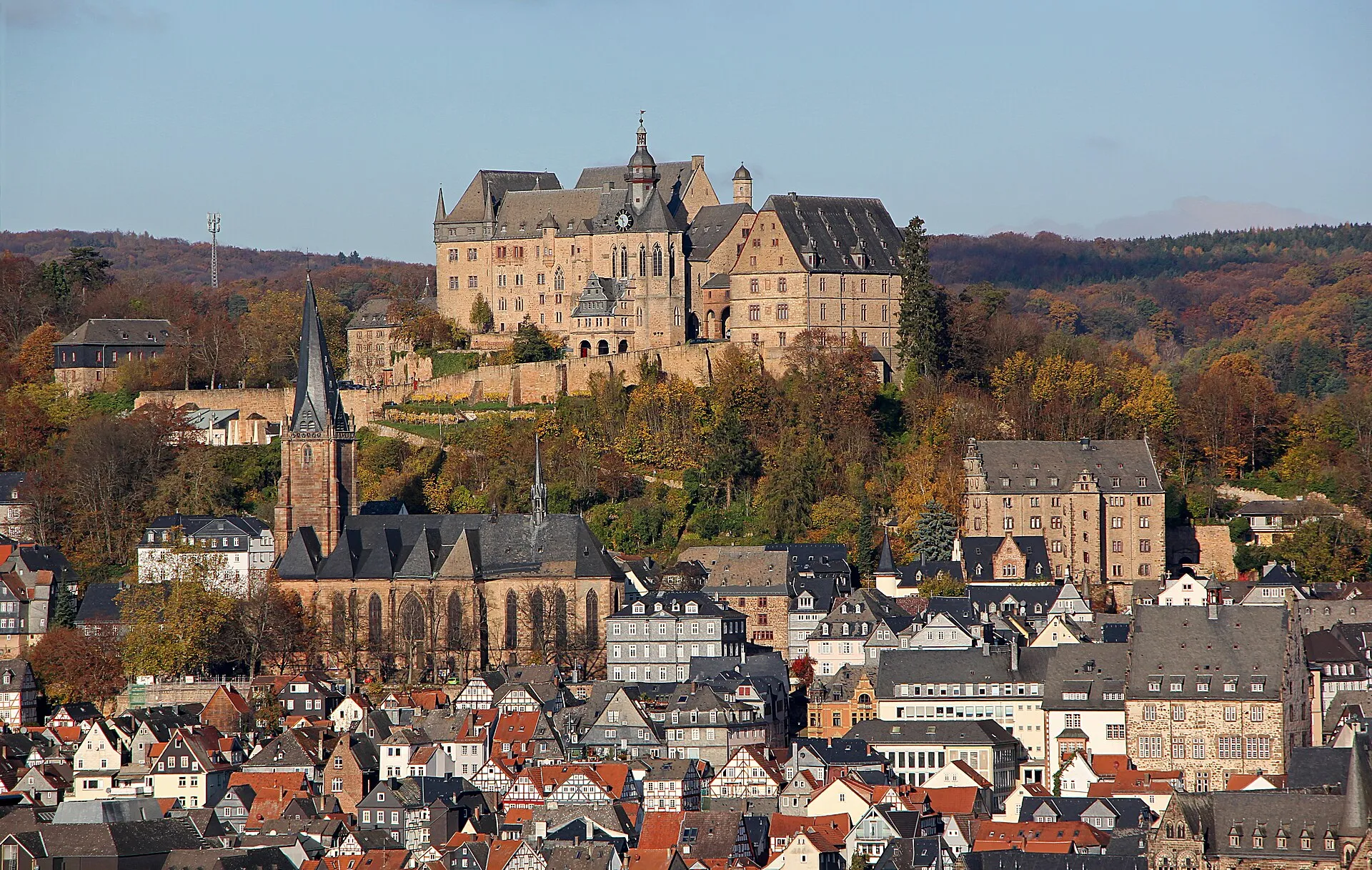
Marburg is built upwards: the old town sits on the slope above the river Lahn, the hospital and large parts of the university are out on the Lahnberge hills, and what lies between them is bus rides and steps. Public lifts run between the lower town and the Oberstadt, as far as they are in service; the times are published by the city of Marburg.
For you that means: changing restaurant costs you height here, so decide beforehand. Outside term time and on Sundays less is open, so ring ahead rather than hope. On public holidays, during the city festival and at the Advent and Christmas markets the centre turns into a field of stalls: almost everything sold there is made of dough or bread, and the restaurants are full, so do not plan such days as your dinner.
Which Central and North Hessian dishes contain gluten?
Potatoes and quark shape the region’s cooking, and that plays into your hands. The dishes below are mostly North Hessian and appear in Marburg in country inns and at festival times:
- Nordhessische Ahle Wurscht (air-dried raw sausage): Air-dried raw sausage, seasoned with salt, pepper and regional ingredients. What goes in is each butcher’s own decision, so ask for the manufacturer’s ingredient list. Slicing often happens on the same machine as sausage containing bread, and it is almost always served with bread.
- Weckewerk (pork speciality bound with bread rolls): A home-butchering speciality of boiled pork and rind, bound with soaked wheat rolls, including in the preserved versions. The bread is an integral part of the mixture, and a bread-free version is not usual. Nobody reading “Weckewerk mit Pellkartoffeln” thinks of bread rolls, or of the shared pan.
- Quellkartoffeln un Siebkäs (boiled potatoes with seasoned quark): Boiled potatoes with seasoned quark, plus onion, caraway and herbs, no dough and no grain. What is left to clear up: bought-in quark preparations can be thickened, the cooking water may have held pasta, and in North Hessia these potatoes are the standard side to Weckewerk. Ask for a separate pot, a separate plate and no bread.
- Grüne Soße nordhessischer Art (cold herb sauce): A cold herb sauce of smetana-style cream, quark, eggs, mustard and herbs, there without cress and chervil, and depending on the house with dill or lemon balm. Cold, it is not thickened, but it also comes ready-made: ask about the mustard, the vinegar and any bought-in herb mix. The risk is what comes with it, because a breaded cutlet counts as a side too.
- Kartoffelsalat mit Kraut (potato salad with white cabbage): Potatoes boiled the day before, with white cabbage, onion, stock, vinegar and oil. The risk sits in the dressing, not in the salad: instant stocks and stock cubes often contain wheat, and some kitchens pull the dressing together with flour as well. If sausages come alongside, they are a question of their own.
- Geriebener Kartoffelkuchen (grated potato cake): Grated raw potatoes bound with egg, with bacon depending on the house, baked in the oven or fried in the pan. The basic form contains no grain, but the recipes differ. Ask whether flour, semolina or breadcrumbs go in against the wetness.
- Hessischer Speckkuchen (bacon tart on yeast dough): A tray-baked tart of wheat yeast dough with bacon, eggs, caraway and pepper. On top of the flour in the dough comes the flour for rolling it out, and the topping cannot be lifted off. The same goes for Zwiebelkuchen (onion tart) and potato tarts on bread dough: the name says nothing about the base.
Your best bets are boiled potatoes and quark, the cold herb sauce, and meat, fish and vegetables without breading and without sauce. The air-dried sausage works too, if the ingredient list is right and it is cut by hand or on a cleaned machine and comes on its own plate without bread; freshly cut on its own is not enough.
What should I watch for in the Oberstadt?
In the evening the Oberstadt is the obvious choice and the hard one at the same time. Most of what is open up there sits in very old, narrow houses, and in small kitchens all the dishes share a handful of pieces of equipment. So do not ask whether a dish is gluten-free, ask what else goes into the same fryer and the same cooking water, and whether the sauce is thickened with flour. The drink of the house is beer, and beer made from barley or wheat is out for you: ask about cider, wine or juice straight away.
The order matters: ring first, then go up. You get up there by steps, by the small bus through the lanes, which runs rarely, or by the lifts, as far as they are in service. If the first place does not work out, the alternative is not the door next to it but a whole storey of city further down. Bring something of your own for that case.
How does Gluti help me in Marburg?
The map in Gluti shows you which places in and around Marburg are listed; each one is checked by the Gluti team first. The level tells you how a place works: “100% gluten-free”, “Separate preparation” or “Gluten-free options”. Because there are metres of climb between the Oberstadt and the Lahnberge, a look at the map is worth more here than elsewhere. For many places you can also see whether others would eat there again; what has worked you can save as a favourite.
Even checked information is no guarantee, because things can change in a kitchen. So ask every time anyway. Which questions work and which answers are a warning sign is in the article What to ask in a restaurant, and the background on fryers, pizza ovens and toasters is in the article on cross-contamination. The guide on cafés and bakeries is worth reading alongside it. If a good place is missing from Gluti, you can suggest it in the app. For talking to others: the German coeliac society (Deutsche Zöliakie-Gesellschaft, DZG) has volunteer contacts and discussion groups across the country, and the DZG can tell you whether there is one in Marburg or Central Hessia.