Gluti
Eating gluten-free in Mainz
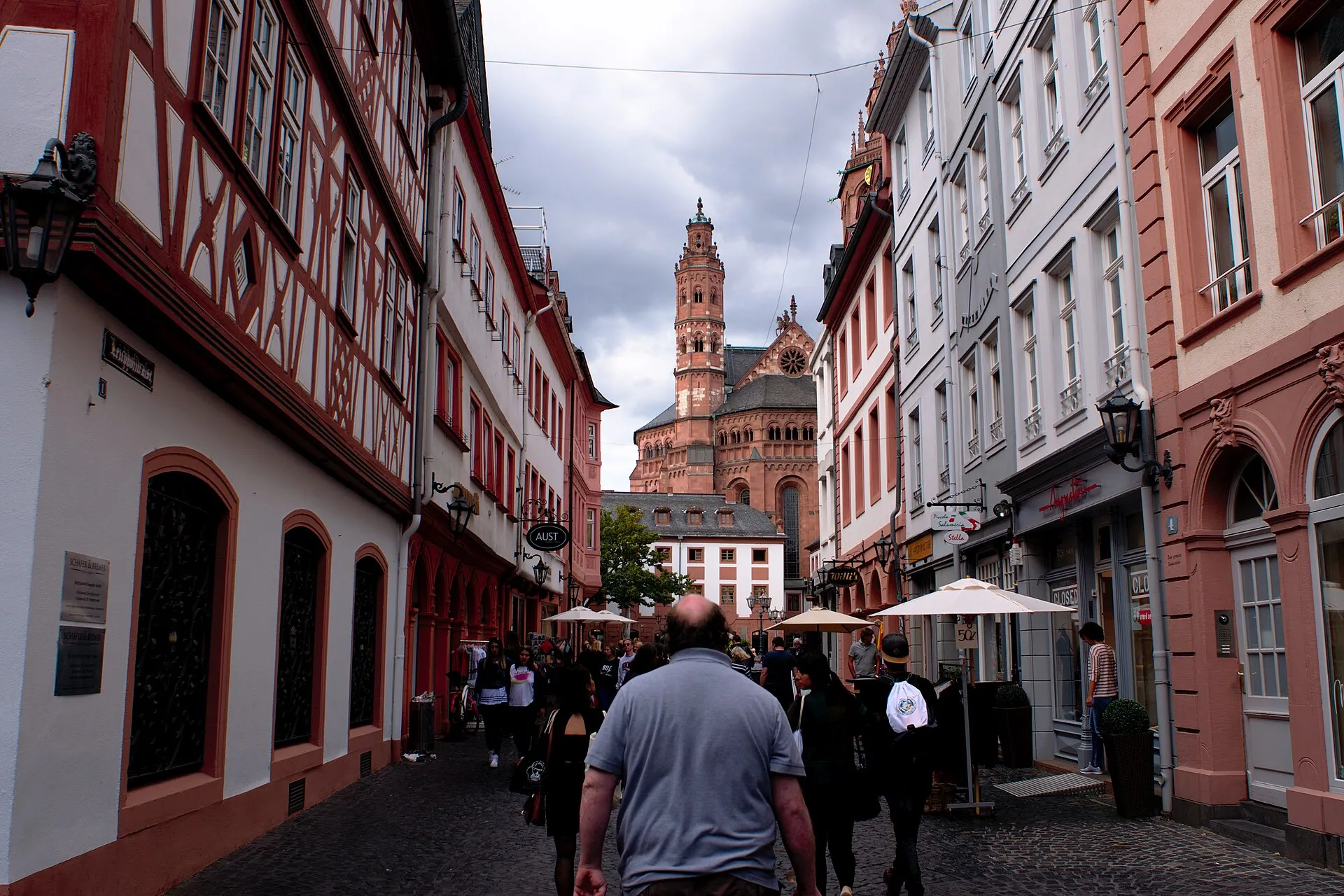
Mainz is a state capital and a university city, and above all a wine city, set between Rheinhessen and the Rheingau. Wiesbaden lies just opposite on the other bank of the Rhine. The good news: wine is naturally gluten-free. The bad news: almost everything eaten with it comes with bread or a roll.
Gluti offers guidance and is not a medical device. Its information does not replace medical advice.
Which places in Mainz have been checked?
14 places in and around Mainz have been checked by the Gluti team, within roughly 15 kilometres.
By kind
- 4 Italian restaurants and pizzerias
- 4 restaurants
- 2 Asian restaurants
- 1 bakery or patisserie
- 1 café
- 1 snack bar or pub
- 1 vegetarian or vegan restaurant
Which places these are, with a map and the month they were checked, is in the app. The numbers here change as soon as new places are checked.
Can you eat out gluten-free in Mainz?
Yes, and together with Wiesbaden you have more choice than the size of the city suggests. Only the Rhine separates the two state capitals, and the Theodor Heuss Bridge gets you across quickly. If you eat in Mainz in the evening and spend the day in Wiesbaden, plan both sides together rather than starting your search again at the bridge.
The allergen information a restaurant has to give you only gets you halfway. It has to tell you which of the 14 allergen groups is in a dish as an ingredient or a processing aid, naming the cereal itself in the case of gluten. It may be given verbally, in which case a written or electronic record has to exist and be made available to you on request. What it leaves out is everything that joins the dish while it is being prepared: the fat that held breaded food before, the knife that has just cut bread, the basket of pretzels passed round the whole table. That is the part you have to ask about yourself.
What should I know about Mainz?
Mainz eats where it drinks. Rheinhessen is Germany’s largest wine-growing region, and in the old town around the cathedral there are wine taverns where the menu is short and the glass is the point. For you that means two things. The drink is no problem, because wine, sparkling wine and Federweißer, the young, still-fermenting wine of the autumn, are all made from grapes. The food that goes with them, on the other hand, is often cold, quick and meant for sharing: cheese, sausage, bread, pretzels. A wine tavern with a small kitchen rarely has a second pan or a board of its own. So do not only ask what is in a dish, ask where it is put together as well.
The second thing is the calendar. Mainz is a city of festivals, and on certain days of the year the centre is packed: at carnival, at the wine market in late summer and on St John’s Night in June. Add the home games of Mainz 05. Tables are then scarce and kitchens are running flat out. Book in those weeks and mention your gluten question as you book. A kitchen that knows beforehand cooks differently from one that finds out when the plate is served.
And the third: the university brings a lot of young people to the city, and with them places serving bowls, burgers and vegan food. That is a good complement to the wine tavern, but vegan does not mean gluten-free. Seitan is wheat protein, and many meat substitutes are bound with wheat.
Which specialities of Mainz contain gluten?
With most of them, the gluten is not in the dish itself but in what comes with it:
- Spundekäs: A cream of soft cheese or quark, often with butter or cream, plus onions, paprika and, depending on the place, garlic. There is no cereal in it. It is almost always served with small lye pretzels, though, and those are made from wheat flour. Dipping pretzels into the Spundekäs leaves crumbs in the bowl. Order a portion of your own rather than eating from the shared bowl.
- Handkäs mit Musik: A sour-milk cheese with the “Musik” of onions, vinegar, oil and pepper. Neither contains cereal. The bread beside it does, and butter and crumbs travel across the same plate. Ask for a plate without bread rather than pushing it aside.
- Fleischwurst: The “Worscht” in “Weck, Worscht un Woi”, that is a roll, a ring of Fleischwurst and wine, the classic Mainz snack. The sausage is a scalded sausage, and the German food code generally allows cereals, starch and vegetable protein in meat products. So ask to see the packaging or the butcher’s ingredient list. The Weck, the roll, is made from wheat. Order the sausage explicitly without it, before the two end up on the same plate.
- Kreppel: What Mainz calls the doughnut known elsewhere in Germany as a Berliner or Krapfen: a yeast dough made from wheat flour, fried in fat and filled. At carnival they are everywhere. The fat they are fried in then matters for everything else from the same fryer as well.
- Onion tart: Served with the Federweißer in autumn. The base is a yeast dough made from wheat flour, and flour can go into the topping too. You can drink the Federweißer, but only eat the tart if it was explicitly baked gluten-free.
- Gravy and soups: Plain country cooking thickens with a roux, and a thickened sauce cannot be rescued afterwards. Agree on a swap for starch before anything is cooked, or order the dish without the sauce.
- To drink: Wine, sparkling wine and Federweißer are made from grapes and are naturally gluten-free. Beer made from barley or wheat contains gluten unless it says “gluten-free” explicitly. Malt beer and other malt drinks are made from barley malt and contain gluten. With anything containing syrup, ask.
Your best bets are meat, fish, vegetables, potatoes and salad without breading and without a thickened sauce. Ask about the preparation there too, for instance whether things are fried in the same pan.
What should I watch for at carnival and the market breakfast?
In Mainz, carnival is not a weekend but a season, and on the last days up to Shrove Tuesday, with the Rose Monday parade as the high point, the centre turns into one long party. People eat standing up: Kreppel, rolls with sausage, fried food from a stall. At a mobile stall one fryer serves everything, and even when a dish’s ingredients are gluten-free in themselves, cross-contamination there is next to impossible to rule out. On those days food of your own is not a stopgap, it is the plan. And if you want to sit down somewhere in the evening, book well ahead.
The market breakfast follows the same pattern at a gentler pace: on Saturdays from March into the autumn, winegrowers pour wine on the squares around the cathedral, and “Weck, Worscht un Woi” goes with it. You can drink the wine without a second thought. For food, bring something of your own or buy packaged goods with an ingredient list at the market, fruit, or cheese in one piece. The same goes for the wine market and the wine festivals in the outer districts: the wine is the safe part, the plate is the question.
How does Gluti help me in Mainz?
In Gluti you can see on the map which places in and around Mainz and Wiesbaden are listed. Every place is checked by the Gluti team before it appears. The level tells you how a place works: “100% gluten-free”, “Separate preparation” or “Gluten-free options”. For many places you can also see whether other people would eat gluten-free there again and what they were able to eat.
Because Mainz and Wiesbaden are so close together, it pays here to look at the whole map rather than just your side of the Rhine. Save places on both sides as favourites, and on a festival day you will not have to start searching when every table is taken. If you know a good place in Mainz, Wiesbaden or Rheinhessen that is missing from Gluti, you can suggest it in the app.
Even checked information is no guarantee, because things can change in a kitchen. So ask every time anyway. Which questions work and which answers are a warning sign is in the article What to ask in a restaurant, and the background on fryers, pizza ovens and toasters is in the article on cross-contamination. And for talking to others: the German coeliac society (Deutsche Zöliakie-Gesellschaft, DZG) runs volunteer-led discussion groups across the country, and the DZG can tell you whether there is one in Mainz or Wiesbaden.