Gluti
Eating gluten-free in Münster
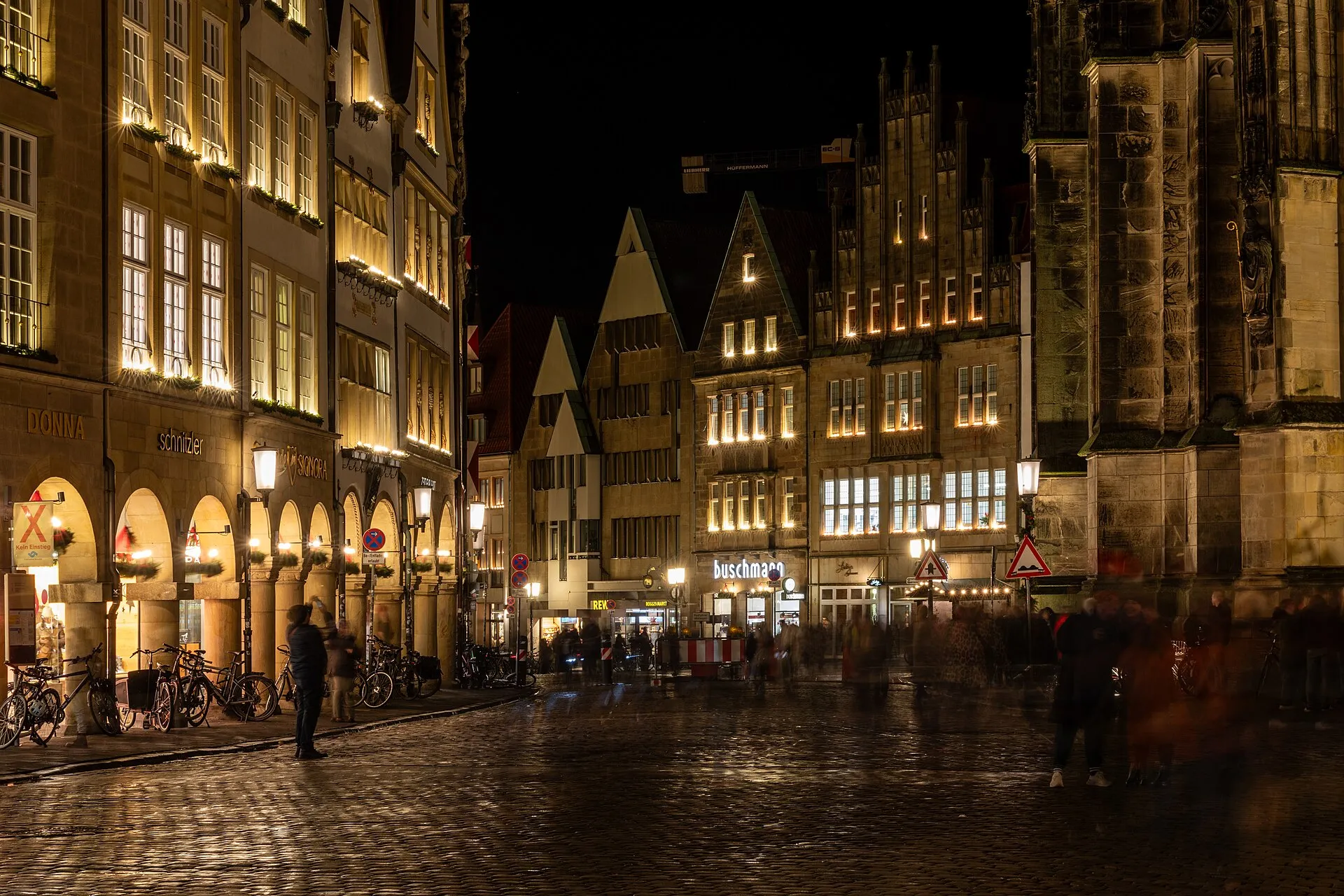
Münster is a university city, a cycling city and the city of the Peace of Westphalia. Cooking in the Münsterland is hearty and honest, and that is exactly why the gluten is often where you cannot see it: in what thickens and binds.
Gluti offers guidance and is not a medical device. Its information does not replace medical advice.
Which places in Münster have been checked?
14 places in and around Münster have been checked by the Gluti team, within roughly 15 kilometres.
By kind
- 5 bakeries and patisseries
- 2 cafés
- 2 Italian restaurants and pizzerias
- 2 restaurants
- 1 Asian restaurant
- 1 shop
- 1 vegetarian or vegan restaurant
Which places these are, with a map and the month they were checked, is in the app. The numbers here change as soon as new places are checked.
Can you eat out gluten-free in Münster?
Yes, and Münster makes it easier for you than many cities of the same size. The centre is compact, and by bike you are only minutes from the Prinzipalmarkt to the Aasee lake, the Kreuzviertel or the harbour. If a place is full or the answer from the kitchen does not convince you, the next one is not far. Plan ahead all the same, because the popular places book up quickly, especially in the evening and at weekends.
What the allergen information tells you is not quite enough. It has to say which of the 14 allergen groups is in a dish as an ingredient or a processing aid, naming the cereal itself in the case of gluten. It may be given verbally, in which case a written or electronic record has to exist and be made available to you on request. What it leaves out is everything that joins the dish while it is being cooked: the pan that held breaded food before, the slicing machine that bread goes over too, the fat everything is fried in. That is the part you have to ask about.
What should I know about Münster?
The first thing is the university. Münster has one of the largest universities in Germany, and you can tell from the food: lots of cafés, lunch menus and places serving bowls, burgers and vegan food. That widens your choice, but vegan does not mean gluten-free. Seitan is wheat protein, and many meat substitutes are bound with wheat. Between terms the city is noticeably quieter, while at the start of term it is full.
The second thing is the cooking itself. The Münsterland cooks with pork, beef, potatoes and rye, and much of it is braised for a long time and thickened. In a pub with a Westphalian menu, fried potatoes, meat and vegetables are often a good choice, but the sauce beside them rarely is. So always ask what it is thickened with, and if in doubt order without.
And the third: Münster is a city of markets. The weekly market on the cathedral square runs on Wednesdays and Saturdays, and three times a year the Send arrives, a big funfair by the palace. More on that below.
Which Münsterland dishes contain gluten?
In Westphalian cooking the gluten is less often in the main product than in the binding, the side and the bread:
- Westfälischer Knochenschinken (Westphalian ham on the bone): Raw ham on the bone, traditionally made with nothing but a salt and saltpetre mixture, sugar and beech smoke. It only becomes reliable with the ingredient list, though, because the German food code generally allows cereal products and starch in meat products, and curing mixes can contain carriers with gluten. Pumpernickel classically lies beside it, at least 90 per cent coarse rye meal under the food code, and with goods from the counter ask about the slicing machine: if bread goes over it too, take an uncut piece.
- Töttchen: A sour ragout of veal and veal tongue, seasoned with mustard, a classic of the Münsterland pubs. The sauce is a roux, as the recipe the city of Münster hands out says too, and a thickened sauce cannot be rescued afterwards. Töttchen can only be gluten-free if the kitchen thickens it with starch from the start. It often comes with bread.
- Panhas: A mixture of sausage stock, meat and flour that sets firm, is cut into slices and fried in a pan. Buckwheat flour is the traditional choice, and buckwheat is naturally gluten-free. Shop-bought Panhas sometimes contains wheat flour, though, and some versions in the Ruhr add pearl barley as well. Without an ingredient list Panhas therefore counts as uncertain, and the pan matters as well.
- Pfefferpotthast: A Westphalian stew of beef and the same amount of onions, heavily peppered. It is classically thickened with grated stale bread or breadcrumbs, and that is not a trace but a main ingredient. A swap for starch has to be agreed beforehand, because a thickened sauce cannot be rescued.
- Struwen: Small yeast pancakes with raisins, eaten in the Münsterland on Good Friday by tradition. The dough is made from wheat flour, so flour is the foundation here.
- Gravy and soups: Plain country cooking thickens with a roux, and a thickened sauce cannot be rescued afterwards. Agree on a swap for starch before anything is cooked, or order the dish without the sauce.
- To drink: Münster has its own tradition of Altbier, here a pale, top-fermented beer, and in summer there is Altbierbowle, Altbier with fruit. Both are beer brewed from malt and contain gluten unless it says “gluten-free” explicitly. Wine and sparkling wine are made from grapes and are naturally gluten-free. Malt beer and other malt drinks are made from barley malt and contain gluten. With anything containing syrup, ask.
Your best bets are meat, fish, vegetables, potatoes and salad without breading and without a thickened sauce. Ask about the preparation there too, for instance whether the fried potatoes go in the same pan as the schnitzel.
What should I watch for at the Send fair and the weekly market?
The Send is Münster’s big funfair, with rides and lots of stalls on the square by the palace, in spring, in summer and in autumn. People eat on the move: potato fritters, sausage in a roll, roasted almonds, baked goods. At a mobile stall one fryer or one griddle serves everything, and even when a dish’s ingredients are gluten-free in themselves, cross-contamination there is next to impossible to rule out. At the Send, food of your own is not a stopgap, it is the plan. Packaged goods with a list of ingredients, and drinks, are the exception you can build on.
The weekly market on the cathedral square, on the other hand, is a good place for you. Fruit, vegetables, cheese in one piece and eggs are gluten-free in themselves, and at many stalls you can ask directly what is in the sausage or the spread. Take care at the snack stalls and with anything lying next to bread and cake. And on market days the cathedral square is crowded: if you want to eat afterwards, go early or considerably later.
How does Gluti help me in Münster?
In Gluti you can see on the map which places in and around Münster are listed. Every place is checked by the Gluti team before it appears. The level tells you how a place works: “100% gluten-free”, “Separate preparation” or “Gluten-free options”. For many places you can also see whether other people would eat gluten-free there again and what they were able to eat.
Because distances in Münster are short, a small list of favourites to switch between depending on the day pays off here: one for lunch in the centre, one for the evening at the harbour or in the Kreuzviertel. If you know a good place in Münster or the Münsterland that is missing from Gluti, you can suggest it in the app.
Even checked information is no guarantee, because things can change in a kitchen. So ask every time anyway. Which questions work and which answers are a warning sign is in the article What to ask in a restaurant, and the background on fryers, pizza ovens and toasters is in the article on cross-contamination. The guide on cafés and bakeries is worth a look too. And for talking to others: the German coeliac society (Deutsche Zöliakie-Gesellschaft, DZG) runs volunteer-led discussion groups across the country, and the DZG can tell you whether there is one in Münster or the Münsterland.