Gluti
Eating gluten-free in Graz
Graz is the capital of Styria, and Styrian cooking has a reputation of its own: pumpkin seed oil, fried chicken, runner beans. Much of it is naturally gluten-free, some of it is breaded or wrapped in pastry. With the allergen letters on the menu and a few questions, you will get on well.
Gluti offers guidance and is not a medical device. Its information does not replace medical advice.
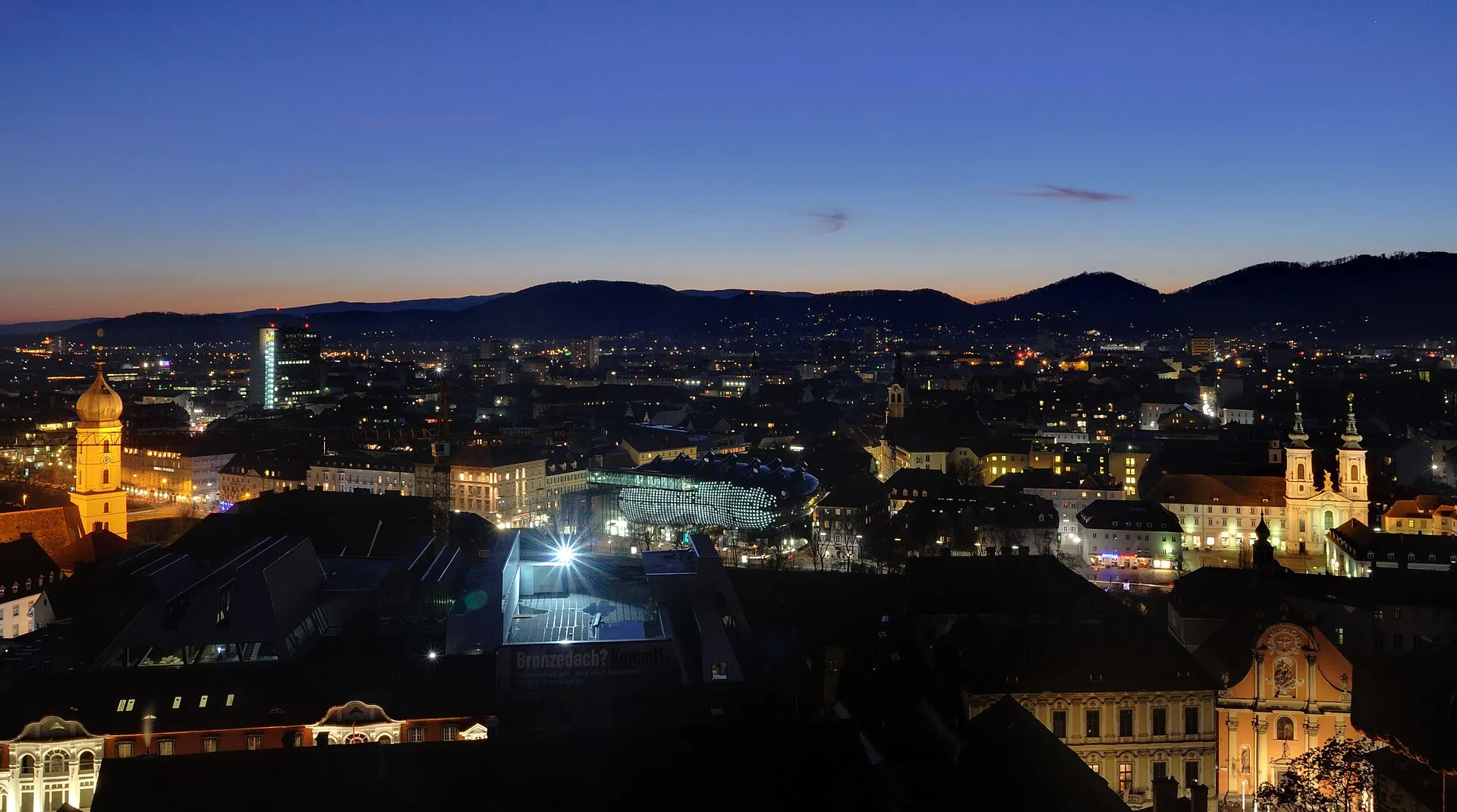
Which places in Graz have been checked?
29 places in and around Graz have been checked by the Gluti team, within roughly 15 kilometres.
By kind
- 7 Italian restaurants and pizzerias
- 7 restaurants
- 4 cafés
- 4 ice cream parlours
- 3 snack bars and pubs
- 2 bakeries and patisseries
- 1 other place
- 1 vegetarian or vegan restaurant
Which places these are, with a map and the month they were checked, is in the app. The numbers here change as soon as new places are checked.
Can you eat out gluten-free in Graz?
Yes. With around 300,000 people, Graz is Austria’s second-largest city. Alongside the traditional Gasthaus, the Austrian inn, there are cafés, bakeries and restaurants that cook or bake gluten-free, and many kitchens are familiar with coeliac disease. The old town around the Hauptplatz and the Schlossberg hill is compact, and beyond it lie the districts on both banks of the river Mur, such as Lend, Gries, Geidorf and St. Leonhard. So look at the map beforehand and allow for the journey; the trams get you across the city quickly.
Austria is part of the EU, so the same rules apply as in Germany. Restaurants must be able to tell you which of the 14 allergen groups are in a dish, and gluten is one of them. What this information does not cover is the same as anywhere: the fryer the fried chicken goes into too, the pan, the board the bread is cut on. That is the part you have to ask about.
What should I know about Graz?
The first thing is the letters. As everywhere in Austria, on many menus a row of capital letters follows each dish, and each letter stands for an allergen group. A means cereals containing gluten. You can see at a glance where flour, bread or breadcrumbs are involved. A missing A only means that gluten is not an ingredient, though. The letter says nothing about the fryer, the pan or the work surface, so ask about those.
The second thing is the language. Styrian German has its own words, and some of them concern you directly. Brösel are breadcrumbs. Kren is horseradish, Schwammerl are mushrooms, Erdäpfel are potatoes. In Styria Heiden means buckwheat, so a Heidensterz is made from buckwheat flour. And Kernöl always means pumpkin seed oil, which goes on almost everything here.
And the third: Styrian cooking is closer to vegetables and salads than Viennese cooking. Pumpkin seed oil, runner beans, horseradish and cabbage contain no cereal in themselves. So a Styrian menu often has more without breading than the fried chicken suggests.
Which Styrian dishes contain gluten?
Some of the Styrian menu is naturally gluten-free, and some of it is almost nothing but dough and breading:
- Steirisches Backhendl (Styrian fried chicken): Chicken pieces coated in flour, egg and breadcrumbs and fried in fat, often with a potato salad dressed with pumpkin seed oil. Flour is in it twice, in the first layer and in the crumbs. The salad is often fine if it is not plated next to the chicken.
- Käferbohnensalat (runner bean salad): Large cooked runner beans with onions, vinegar, salt and pumpkin seed oil. The ingredients are naturally gluten-free. Still ask about the dressing and whether bread or croutons come with it.
- Kürbiskernöl (pumpkin seed oil): A dark green oil cold-pressed from the roasted seeds of the Styrian oil pumpkin. It is naturally gluten-free and goes on salad, soup, scrambled eggs and even vanilla ice cream.
- Steirisches Wurzelfleisch (pork with root vegetables): Boiled pork with root vegetables such as carrots, celeriac and parsley root, served with freshly grated horseradish and potatoes. Meat, vegetables and horseradish contain no cereal. Ask whether stock powder goes into the broth and whether bread is served with it.
- Heidensterz (buckwheat Sterz): Buckwheat flour cooked in water or broth and broken up with fat into small crumbs, often eaten with soup or coffee. Buckwheat is naturally gluten-free, but Sterz is also made from wheat flour or maize, and buckwheat flour can be contaminated. Ask which flour is used.
- Krautstrudel (cabbage strudel): Strudel pastry around a filling of braised cabbage, often with bacon and caraway. The pastry is made from wheat flour.
- Brettljause (cold platter): A wooden board with cold roast meat, smoked pork, bacon, cheese, horseradish and Verhackert, a spread of finely chopped bacon. The meat and cheese often contain no cereal, the sausages and spreads not always. And there is almost always bread on the same board. Ask about the ingredients and have a plate made up for you without bread.
- To drink: Styrian wine, Schilcher, a rosé from West Styria, and Sturm, a young, partly fermented grape must, are naturally gluten-free, as are apple juice and cider. Beer made from barley or wheat contains gluten unless it says “gluten-free” explicitly. Malt beer and other malt drinks are made from barley malt and contain gluten.
Your best bets are grilled meat and fish, potatoes, salads with pumpkin seed oil and vegetables without breading. Ask about the preparation there too, for instance whether things are fried in the same pan.
What should I watch for at a Buschenschank and a farmers’ market?
The Buschenschank is the Styrian counterpart to the Viennese Heuriger: winegrowers serve their own wine and, alongside it, mainly cold food, mostly of their own making. Many are in the wine country south and west of Graz, for instance along the South Styrian Wine Road, and a Buschen, a bundle of twigs hung outside, shows that one is open. On the table you get the Brettljause, with spreads, pumpkin seed oil and bread. The wine is no problem for you, the board more so, because bread, knives and spreads sit close together. Order your plate explicitly without bread and ask whether it can be laid out on a board of its own. Whether you can bring your own gluten-free bread is best asked when you order.
Farmers’ markets are part of Graz, for instance the Kaiser-Josef-Markt and the market on the Lendplatz. Fruit, vegetables, cheese, eggs and pumpkin seed oil are sold there by the producers, and much of it is naturally gluten-free. With bread, pastries and baked goods at the stalls, the same applies as in any bakery: flour is in the air and on the counter.
What do I say in a restaurant?
In Graz you speak German, and “Ich habe Zöliakie” (I have coeliac disease) is understood, and many staff speak English too. A few words help: “ohne Brösel” (without breadcrumbs), “ohne Brot” (without bread), “nicht mit Mehl gebunden” (not thickened with flour). Ask explicitly about the fryer and the pan, because with fried chicken everything else goes in there too. And say that even a small amount harms you, so that nobody thinks a little breading will not matter.
The card to show works in Graz in German, printed out or as a picture on your phone. It can go into the kitchen as it is. Which questions work in general is in the article What to ask in a restaurant.
How does Gluti help me in Graz?
In Gluti you can see on the map which places in Graz are listed, from the old town out into the districts. Every place is checked by the Gluti team before it appears. The level tells you how a place works: “100% gluten-free”, “Separate preparation” or “Gluten-free options”. For many places you can also see whether other people would eat gluten-free there again and what they were able to eat.
Save a few favourites near where you are staying before your visit, plus a café for the afternoon, and you will not have to start searching when hunger strikes. If you know a good place in Graz that is missing from Gluti, you can suggest it in the app.
Even checked information is no guarantee, because things can change in a kitchen. So ask every time anyway. The background on fryers, pizza ovens and toasters is in the article on cross-contamination, and what to think about for the journey is in the guide to travelling gluten-free.