Gluti
Eating gluten-free in Nuremberg
The specialities Nuremberg is known for almost all depend on flour: Bratwurst im Weggla, Schäufele with a dumpling, Lebkuchen. With some preparation you will still find something good.
Gluti offers guidance and is not a medical device. Its information does not replace medical advice.
Which places in Nuremberg have been checked?
19 places in and around Nuremberg have been checked by the Gluti team, within roughly 15 kilometres.
By kind
- 5 restaurants
- 4 Italian restaurants and pizzerias
- 2 bakeries and patisseries
- 2 ice cream parlours
- 2 vegetarian and vegan restaurants
- 1 Asian restaurant
- 1 café
- 1 shop
- 1 snack bar or pub
Which places these are, with a map and the month they were checked, is in the app. The numbers here change as soon as new places are checked.
Can you eat out gluten-free in Nuremberg?
Yes, but with a plan. Of all things, the three dishes Nuremberg is known for are the difficult ones: Bratwurst im Weggla (grilled sausages in a wheat roll), Schäufele with gravy and a dumpling, and Lebkuchen. The gluten sits in the roll, in the thickening or in the dough. Your chances are better in the international restaurant scene, where rice, maize or chickpeas are often the basis from the start.
There is also this: places that work entirely gluten-free are still the exception in Nuremberg. So you will mostly be eating in kitchens that work with wheat as well, and a phone call in advance gets you further than looking around on the spot. And do not rely on the allergen information alone either: it only has to name the allergenic ingredients, not the whole recipe, and it says nothing about whether separate fryers, boards and pans are used.
What should I know about Nuremberg?
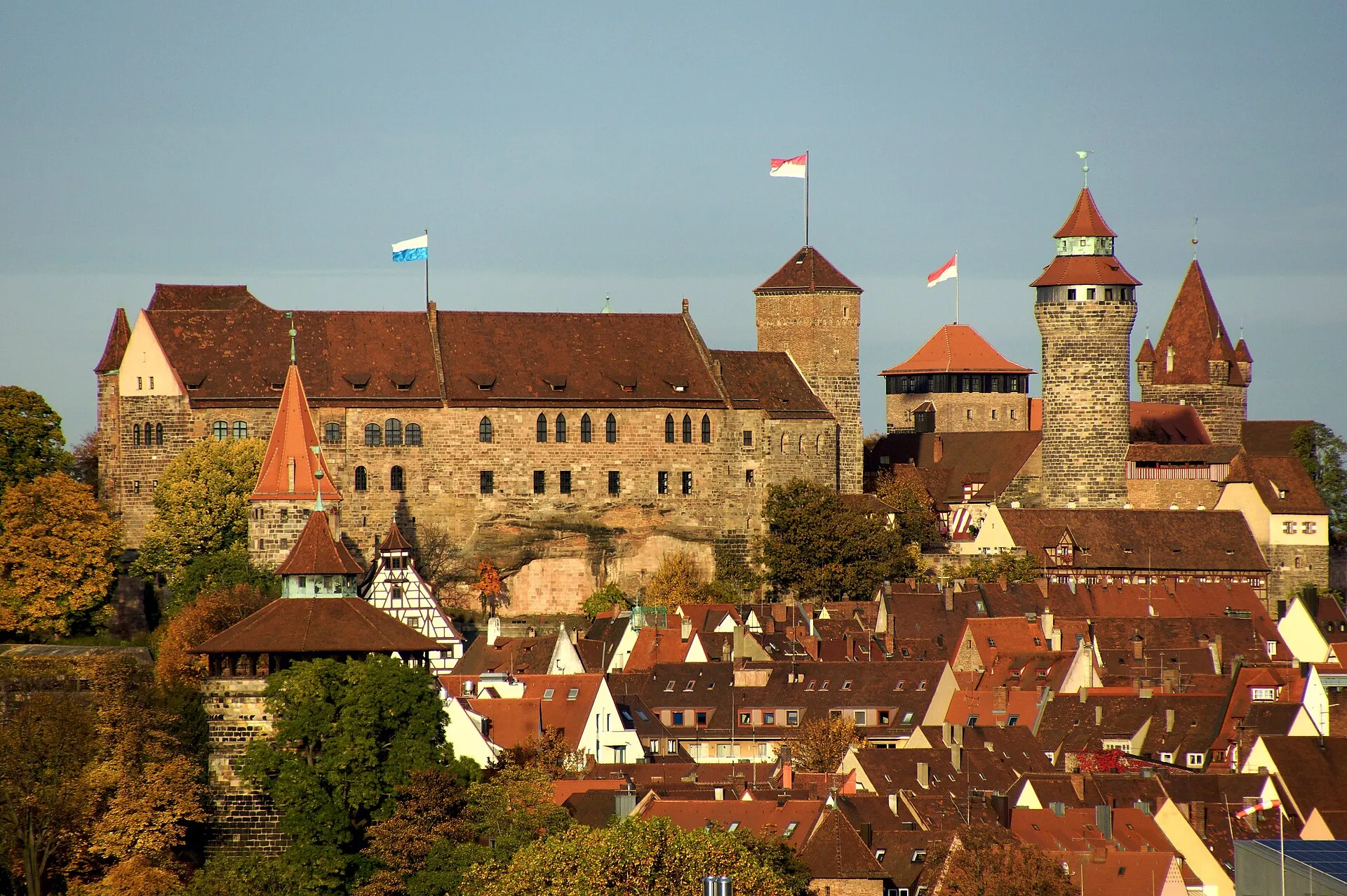
Nuremberg is the largest city in Franconia, with the imperial castle above the old town and the exhibition centre in the south. During trade fairs and on Advent weekends tables are scarce, and that is when the kitchen has little room for questions about ingredients.
For you that mostly means choosing your moment. Reserve if you can, and raise your question right away when you do. A weekday lunchtime or an early evening is considerably more relaxed.
Which Franconian dishes contain gluten?
With the Nuremberg classics it is rarely the main product that decides, but what lies next to it or goes in with it:
- Nürnberger Rostbratwürste: Small grilled pork sausages seasoned with marjoram. Cereals are not traditionally part of them, but that is not a guarantee, because the protected name mainly governs cuts of meat, fat content and size; ask to see the ingredient list, loose goods included. The Weggla is a wheat roll, the same tongs handle rolls and sausages, and with the potato salad you ask what it is dressed with.
- Blaue or Saure Zipfel: Raw bratwurst poached in a broth of vinegar, wine and onions, with no flour, no thickener and no shared pan. Some kitchens use meat or vegetable stock instead of wine, and instant stock often contains gluten-bearing ingredients. Ask whether there is stock in the broth, because it is served in the broth, and cancel the bread and the pretzel.
- Gerupfter and Backstakäs mit Musik: Franconian snack cheeses: Gerupfter made from soft cheese, butter, onion and paprika, Backstakäs with onions, vinegar and oil. Nothing is thickened or breaded, but widespread recipes stir in a splash of beer, and beer contains gluten. Ask about the beer first and then about the bread beside it; Presssack and brawn from the same platter can have bread roll in the recipe.
- Fränkisches Schäufele: Pork shoulder with the bone and the rind, hours in the oven. The meat draws in the liquid it sits in: the roasting tin is topped up with stock, often with dark beer as well, and the crackling is basted with it. “Without gravy” is therefore not enough; ask about beer and stock in the roasting juices, about what the gravy is thickened with, and about flour, crumbs or bread cubes in the dumpling.
- Fränkischer Sauerbraten: Franconian recipes classically thicken the sauce with Saucenlebkuchen, others use a roux, some use both. Lebkuchen dough is made from wheat or rye flour, so the sauce contains gluten even without a spoonful of flour. Ask what the sauce is thickened with, then, not whether there is flour in it.
- Fränkischer Karpfen (Franconian carp): Mirror carp from the Aischgrund, in season from September to April. Gebackener Karpfen is turned in flour and is therefore out, while Karpfen blau is poached in a vinegar broth. What remains to be clarified is the pan and the fryer, because both versions run alongside each other, and the horseradish sauce, which widespread recipes thicken with toast; plain grated horseradish is fine.
- Nürnberger Lebkuchen: The classic dough contains cereal flour, and it is baked on an Oblate, a wafer of flour and water that is eaten with it. With Elisenlebkuchen nuts are the basis, at least 25 per cent, which does not make the mixture flour-free: the German guidelines for fine bakery wares allow up to 10 per cent cereal flour or 7.5 per cent starch. Both places have to be checked, mixture and Oblate, and by the ingredient list rather than by the word Elisenlebkuchen.
- To drink: Nuremberg Rotbier is brewed with barley malt and therefore contains gluten. If you want beer, you need one explicitly labelled gluten-free. That matters twice over here, because Rotbier also goes into braised onions and gravies.
Your best bets are Blaue Zipfel without bread, Gerupfter with your own bread, Karpfen blau without the sauce, and meat, fish, potatoes and vegetables without sauce or breading. Ask about the pan and the fryer there too.
What should I watch for at the Christkindlesmarkt?
From late November or early December to Christmas Eve, the Hauptmarkt is the centre of the city. At the heart of what is on offer are Bratwurst im Weggla and Lebkuchen, which is to say exactly the two things that are out with coeliac disease or have to be checked.
At the bratwurst stalls it is the routine that is the problem, not the sausage: rolls and sausages go through the same tongs. Order the sausages without the Weggla on a plate of their own and have them taken straight off the grill, ideally in the morning or on a weekday. With Lebkuchen, pre-packed goods have the advantage, because packets have to declare the allergens. With loose goods you have to ask, and behind a spoken answer there must be a written record, which you are entitled to see on request. Ask for it, and ask about the Oblate as well.
Glühwein (mulled wine) and Feuerzangenbowle (mulled wine with a rum-soaked sugar loaf burnt above it) are unproblematic in their basic form, flavoured versions with Lebkuchen or biscuit in the name are not. Plan the hot main meal beforehand in a restaurant with a reservation, because the Hauptmarkt is full throughout.
How does Gluti help me in Nuremberg?
In Gluti you can see on the map which places in and around Nuremberg are listed, Fürth within the radius included; Erlangen lies just outside it but shows on the map all the same. Every place is checked by the Gluti team before it appears. The level tells you how a place works: “100% gluten-free”, “Separate preparation” or “Gluten-free options”. Here the level is what decides how closely you need to ask. For many places you can also see whether others would eat there again and what was available gluten-free.
Even checked information is no guarantee, because things can change in a kitchen. So ask every time anyway. Which questions work and which answers are a warning sign is in the article What to ask in a restaurant, and the background on fryers, pizza ovens and toasters is in the article on cross-contamination. In front of a Lebkuchen display case, gluten-free in cafés and bakeries will help as well. If you know a good place in Nuremberg that is missing from Gluti, you can suggest it in the app. And for talking to others: the German coeliac society (Deutsche Zöliakie-Gesellschaft, DZG) has volunteer contacts across the country, and the DZG can tell you whether there are any in Nuremberg or Middle Franconia.